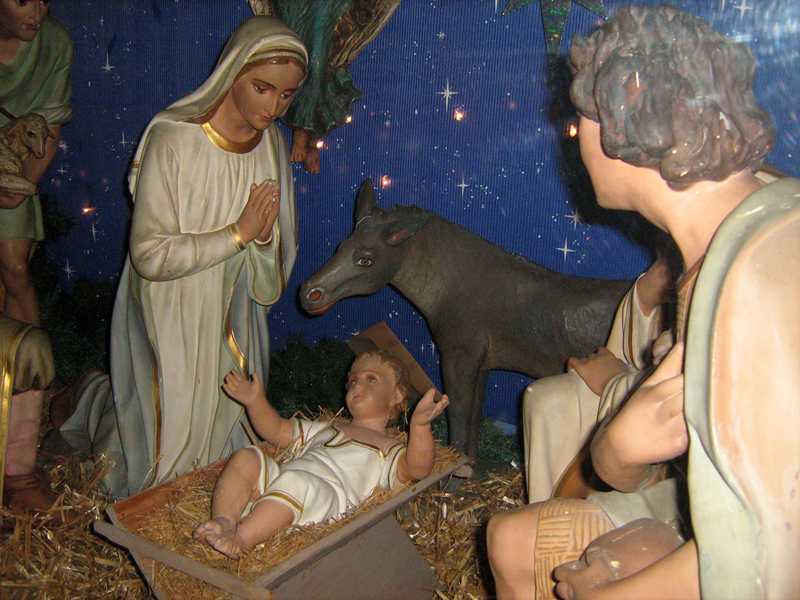
In the beauty of the lilies Christ was born across the sea,
With a glory in His bosom that transfigures you and me:
As He died to make men holy, let us live to make men free,
While God is marching on!

. . . from the BATTLE HYMN OF THE REPUBLIC

Showing posts with label Holidays. Show all posts

Wednesday, June 12, 2013

Battle Hymn of the Republic: Its History and Meaning


Irish Brigade Monument, Antietam National Battlefield
[NOTE: This post was adapted from a recent item on my blog Songs of Praises, which features the best in hymns and sacred music.]
A couple of weeks ago (May 27) people in the United States observed Memorial Day, on which we  remember and honor those who gave their lives while serving our country in the armed forces.  In less than a month (July 1-3), we will mark the 150th anniversary of the Battle of Gettysburg, the costliest and, perhaps, most decisive engagement in the American Civil War.  Dark clouds of wars past, as well as the "wars and rumors of wars" today, are on our minds.  For centuries, people have resorted to sacred music as a way to find meaning, comfort, and inspiration amidst the terrible trials that wars produce. Sometimes a hymn will reflect on what has been lost in past conflicts, especially fallen warriors, and at other times (and often in the same hymn) on the causes for which the war was fought.

War, for a Christian, is among the most troubling features of life in this world. We believe that our God is loving and merciful, yet untold millions of innocent  human beings have been killed, maimed, starved, enslaved, and otherwise suffered in countless wars down through history, a scourge which seems to have no end. God commands us not to kill (Exodus 20:13), but legions of professing Christians have taken up arms, and still do, to defend their homelands or way of life--and too often in the past, most regrettably, to engage in conquest and even to war against each other.  We pray fervently for peace and look forward to the blessed day when "they shall beat their swords into plowshares, and their spears into pruning hooks: nation shall not lift up sword against nation, neither shall they learn war any more." (Isaiah 2:3-4)  And yet, we "put on the whole armour of God" (Ephesians 6:11) and sing rousing hymns that are full of military imagery, such as Onward Christian Soldiers, Who Is on the Lord’s Side?, and Stand Up, Stand Up for Jesus, Ye Soldiers of the Cross. Ultimately, perhaps, war is but one facet of the opposition and conflict that came into the world with sin, and will be our lot until Christ returns and banishes Satan forever.

This view suffuses one of Christendom's (and the world's) most famous hymns, The Battle Hymn of the Republic. This remarkable work may be less of a "hymn" as commonly understood, than an anthem, for it became the inspirational "theme" music for the Union (or perhaps more precisely, the abolitionist) cause in the American Civil War. While it reflects on the issues that gave rise to that war and invokes images common to the 19th century soldier's experience, the Battle Hymn elevates the conflict to a higher, sacred plane and speaks to what many Christians believe about evil, the destiny of the world, and our role in fulfilling that destiny. Its refrain even inspires the title and Web address of this blog!

THE HISTORY BEHIND THE HYMN

The text of the Battle Hymn was written in 1861 by Julia Ward Howe (1819–1910), a prominent American social activist and wife of Samuel Gridley Howe (1801–1876), a famed scholar in education of the blind. Samuel and Julia were both deeply involved in the anti-slavery or "abolitionist" movement, in which thousands of Americans had, for more than thirty years, worked tirelessly to end the practice of slavery in the United States through religious and moral persuasion, political agitation, and even spiriting slaves away to the Northern states and Canada from their places of bondage in the South. Many abolitionists had exhausted their fortunes and risked (and some suffered)  prison or death in the cause. The movement grew out of the American religious revival known as the the Second Great Awakening in the 1820s and 1830s, and its most passionate and committed members were motivated by the conviction that "all people were equal in God's sight; the souls of black folks were as valuable as those of whites; [and] for one of God's children to enslave another was a violation of the Higher Law, even if it was sanctioned by the Constitution." (James Brewer Stewart, Holy Warriors: The Abolitionists and American Slavery (1976)). They were also convinced, as were most zealous believers since the Second Great Awakening, that the Millennium was near and that Jesus Christ would return to the earth soon to usher it in. That society could and should be transformed for the better in furtherance of God's purpose, and that it was the Christian's duty to help bring about that transformation, was an article of faith among religious abolitionists and social reformers of that day.

John Brown
By the 1860s the abolition movement seemed--but for the liberation of some thousands of slaves through the "underground railroad"--to have borne little fruit but to set the Northern and Southern sections of the United States implacably against each other. The 1859 assault on the federal arsenal at Harpers Ferry, Virginia led by John Brown, a deeply religious abolition zealot who sought to spark a slave uprising--and which was funded in part by Samuel Gridley Howe--only hastened the rupture. Finally, five months after anti-slavery Republican Abraham Lincoln was elected President of the United States in November 1860, and several Southern states seceded from the Union, the conflict became an open and deadly Civil War.

According to various accounts, the Battle Hymn was born in the wake of a public review of federal troops outside Washington, D.C. in November 1861, which Julia Ward Howe attended along with her husband Samuel--now a member of President Lincoln's military Sanitary Commission--and the Rev. James Freeman Clarke. At some point the passing soldiers began singing John Brown's Body, a popular Union marching song that referred both to the famous antislavery martyr John Brown and to a certain irrepressible Union soldier of that name from Massachusetts. John Brown's Body itself originated from a popular religious camp-meeting song known as Canaan's Happy Shore or Brothers, Will You Meet Us?, which carried an old folk tune transcribed (and often attributed to) William Steffe (1830–1890), (of whom no known image exists) and published in about 1856. Although the words to John Brown's Body were thought by the more genteel people of the time as rather coarse and irreverent, Mrs. Howe and her party joined in the singing as the soldiers marched by. Reverend Clarke suggested to Mrs. Howe that she write some new lyrics to the familiar tune, and she resolved to do so. As she later recalled:
I went to bed that night as usual, and slept, according to my wont, quite soundly. I awoke in the gray of the morning twilight; and as I lay waiting for the dawn, the long lines of the desired poem began to twine themselves in my mind. Having thought out all the stanzas, I said to myself, 'I must get up and write these verses down, lest I fall asleep again and forget them.' So, with a sudden effort, I sprang out of bed, and found in the dimness an old stump of a pen which I remembered to have used the day before. I scrawled the verses almost without looking at the paper. [Howe, Julia Ward. Reminiscences: 1819-1899. Houghton, Mifflin: New York, 1899. p. 275]
Howe's Battle Hymn of the Republic was first published on the front page of the February 1862 issue of the Atlantic Monthly (editor James T. Fields (1817-1881), who paid Mrs. Howe $5 for the piece, is credited with having given the song the name by which it is known today). By the time federal forces  took the field for their spring campaigns, soldiers were already singing and marching to the song.

Since the Civil War, the Battle Hymn has become one of the USA's most beloved patriotic songs. It also appears in many hymnals, and is widely sung at church services on such national holidays as Memorial Day and Independence Day. It is probably second in eminence only to The Star Spangled Banner as an American patriotic anthem.

THE MEANING AND IMPORTANCE OF THE HYMN

One cannot fully appreciate the meaning and significance of the Battle Hymn without reading and pondering its text in detail:

    Mine eyes have seen the glory of the coming of the Lord:
    He is trampling out the vintage where the grapes of wrath are stored;
    He hath loosed the fateful lightning of His terrible swift sword:
    His truth is marching on.

       
(Chorus)
        Glory, glory, hallelujah!
        Glory, glory, hallelujah!
        Glory, glory, hallelujah!
        His truth is marching on.

    I have seen Him in the watch-fires of a hundred circling camps,
    They have builded Him an altar in the evening dews and damps;
    I can read His righteous sentence by the dim and flaring lamps:
    His day is marching on.

       
(Chorus)
        Glory, glory, hallelujah!
        Glory, glory, hallelujah!
        Glory, glory, hallelujah!
        His day is marching on.

    I have read a fiery gospel writ in burnished rows of steel:
    "As ye deal with my contemners, so with you my grace shall deal;
    Let the Hero, born of woman, crush the serpent with his heel,
    His truth is marching on."

       
(Chorus)
        Glory, glory, hallelujah!
        Glory, glory, hallelujah!
        Glory, glory, hallelujah!
        His truth is marching on.

    He has sounded forth the trumpet that shall never call retreat;
    He is sifting out the hearts of men before His judgment-seat:
    Oh, be swift, my soul, to answer Him! be jubilant, my feet!
    Our God is marching on.

       
(Chorus)
        Glory, glory, hallelujah!
        Glory, glory, hallelujah!
        Glory, glory, hallelujah!
        Our God is marching on.

    In the beauty of the lilies Christ was born across the sea,
    With a glory in His bosom that transfigures you and me:
    As He died to make men holy, let us die to make men free,
    While God is marching on.

       
(Chorus)
        Glory, glory, hallelujah!
        Glory, glory, hallelujah!
        Glory, glory, hallelujah!
        Our God is marching on.

    He is coming like the glory of the morning on the wave,
    He is Wisdom to the mighty, He is Succour to the brave,
    So the world shall be His footstool, and the soul of Time His slave,
    Our God is marching on.

       
(Chorus)
        Glory, glory, hallelujah!
        Glory, glory, hallelujah!
        Glory, glory, hallelujah!
        Our God is marching on.


The Battle Hymn of the Republic is certainly different from most of the works featured in traditional collections of hymns, which tend to focus on the individual and his or her personal transformation through God and Jesus Christ. The Battle Hymn, on the other hand, focuses on the world and the injustice and evil within it, and its impending transformation by Christ, heralded by and working through the armies of His faithful.

The first stanza presents a clear vision of the Lord's return and the fearful judgment coming in its wake:  "glory of the coming of the Lord" (". . . the Son of man coming in the clouds of heaven with power and great glory." Matthew 24:30); "grapes of wrath" ("And the angel thrust in his sickle into the earth, and gathered the vine of the earth, and cast it into the great winepress of the wrath of God."  Revelation 14:19); "terrible swift sword" (". . . out of his mouth went a sharp twoedged sword . . ."  Revelation 1:16).

As has been noted elsewhere, the main element of the chorus--"Glory! Glory! Hallelujah!"-- was probably also inspired by the book of Revelation: " . . . I heard a great voice of much people in heaven, saying, Alleluia; Salvation, and glory, and honour, and power, unto the Lord our God . . ."  (Revelation 19:1).

In the second and third stanzas, the Lord is seen in "the watchfires;" His righteous sentence and His fiery gospel are read in "the dim and burning lamps" and in "burnished rows of steel" (ranks of polished musket barrels). These are things characteristic of soldier life, so the hymn suggests that the army itself constitutes the Lord's "terrible swift sword" and, perhaps, the "Hero born of woman" which is to "crush the serpent" underfoot.

The fourth stanza's reference to the "trumpet that shall never call retreat" also invokes a familiar thing to soldiers of that day, the bugle, and suggests a stern call to duty and action, as well as to Judgment Day, "a day of the trumpet and alarm" (Zephaniah 1:14, 16). Tthat call is not one to be shirked or dreaded by a soldier in God's army, but embraced joyfully: "Oh, be swift, my soul, to answer Him! be jubilant, my feet!"

The fifth stanza is the true climax of the hymn, and reveals its core inspiration: Christ, the beauty and glory of his Person. As He died to free all people  from sin, so should we be ready to give our lives to bring freedom to others ("As He died to make men holy, let us die to make men free"). While the word "slavery" is never used in the Battle Hymn, its implication is unmistakable, given the times and the circumstances of the hymn's author and authorship.

In thus replacing the words to the earthy marching song John Brown's Body, Mrs. Howe clearly intended to give the soldiers' agonizing work a new and higher meaning: not just the conquest of a menacing adversary, not just restoration of the Union, but a deliverance of millions of helpless souls from the crushing evil of bondage, and redemption of the whole nation from guilt for that terrible sin. As another perceptive observer explains: "[Mrs. Howe's] hymn was an attempt to frame [the soldiers'] sacrifice, to place it within the context of a great and glorious cause. . . . the advance of God’s Kingdom on earth."

OUR CALL TO ACTION?

Perhaps it is well that the Battle Hymn omits specific reference to the racial slavery over which the Civil War was fought 150 years ago, for as it is written the hymn speaks eloquently to us today, and calls us to be defenders of the freedom God intended for all our brothers and sisters. No wonder that the Battle Hymn became an anthem of the 20th century's civil rights movement.  In his final sermon delivered in Memphis, Tennessee on the evening of April 3, 1968, the night before his assassination, Dr. Marin Luther King, Jr. closed with the first line of the Battle Hymn: "Mine eyes have seen the glory of the coming of the Lord!"  The Battle Hymn has also come to be associated with the American cause in confronting evil and oppression around the world. It was a favorite of British Prime Minister and World War II leader Winston Churchill, for example, and at his request was played at his funeral in 1965.

Some modern Christians are uncomfortable with the militancy of the Battle Hymn and its call to men and women for such deep and forceful involvement in worldly matters. In any such critique we need to be mindful of the social and religious currents, as well as of the desperate moral and political struggles, out of which it arose. Different conditions and attitudes prevail today, when the initiative for social reform has been largely assumed by, or ceded to, secular forces working through governments and their allied organizations. Moreover, and ominously, there is in our society a growing resistance to the involvement of religious elements in public life. Nevertheless, who but those inspired by the love and teachings of Christ are better suited to show the compassion and self-sacrifice today's world so desperately needs?  Do Christian believers simply stand aside and let the relentless tide of evil (violence, class/ethnic/sectarian enmity, abortion) wash over the world while we gaze upwards waiting for deliverance?  To put it in Civil War terms, should we yield the moral battlefield and ground arms until our General appears to do the fighting for us?  Or do we, in Christ's name and spirit, march forward now and do what we can, until He returns, to dispel Satan's lies and extend God's deliverance to all His beleaguered children?  Even if we do so with plowshares instead of swords, the Battle Hymn of the Republic would still be a perfect anthem for our efforts.

* * * * * * *
VIDEOS ABOUT THE HYMN

It's unusual to have multiple videos telling how a hymn came to be, and of its enduring significance--but the Battle Hymn is a very special piece. Here is the story of the hymn as told by the great actor and director Orson Welles:


Here is another fascinating video relating the story of the Battle Hymn by the great-great-great grandson of Julie Ward Howe:


* * * * * * *
PERFORMANCES OF THE HYMN

There are many excellent (and some not so satisfactory) video renditions of the Battle Hymn. Most present only the first, second, and fifth stanzas. I suppose they're the best-known and easiest to understand and relate to for modern listeners, although the fourth stanza is just as clear and inspiring as the others, in my humble opinion.

Most modern renditions also substitute "live" for the original "die" in the third line of the fifth stanza, making the line read: "As He died to make men holy, let us live to make men free."  It is unclear when and why this change became commonplace. Perhaps it was in reaction against what some find to be the hymn's unsettling militancy. Others believe that "live" is preferable because it embraces commitment and potential sacrifice of one's whole being, in life as well as in death. Out of faithfulness to the original work I generally prefer its wording, but philosophically I prefer "live" for the reason just given. I find either formulation most inspiring.

Here is the video I thought most impressive musically and visually, featuring full orchestration and a large (though, unfortunately, unidentified) choir:


Good solo performances on video are harder to come by. Here is a good one by Judy Collins, joined by a U.S. Army chorus and the Boys Choir of Harlem in a 1993 concert televised live from Washington, D.C.:


For those who prefer a more spiritual, less military presentation, here's one featuring singer Jim Nabors along with images of Christ and scenes from His life and mission on Earth (in contrast to most other renditions, this one features the first, fourth, and fifth stanzas of the hymn):


* * * * * * *

  . . . [T]hey shall see the Son of man
coming in the clouds of heaven
with power and great glory.
And He shall send His angels
with a great sound of a trumpet . . .

Matthew 24:30-31

Sunday, May 27, 2012

Memorial Day: Mansions of the Lord


He maketh wars to cease unto the end of the earth;
he breaketh the bow, and cutteth the spear in sunder;
he burneth the chariot in the fire. ~ Psalms 46:9

Tomorrow, May 28, is Memorial Day in the United States. On this day we remember and honor those men and women in the Armed Forces who gave their lives in service to our country. Today, for those who have never lost a close relative or friend serving in the military, Memorial Day seems to mean little more than an extra day off from work and an occasion for picnics and used car sales. But for those who have borne such a loss, or who have simply made it their business to honor our fallen heroes and support their families, Memorial Day is a profoundly moving time.

But not always a somber, wretched time. Perhaps because Memorial Day falls in the fullest flower of spring, it has always cast for me a ray of light and hope, just behind the dark wall of painful remembrance. As a child I would go with my grandmother every "Decoration Day"--as it was then called--to the cemetery behind our family's church, where we laid a pot of flowers at my long-departed grandfather's grave and with Grandma would say a brief, silent prayer. I recall it as always being sunny and warm. All the veterans' graves were adorned with colorful flags. Yes, we often had a family picnic too, but it was always preceded by that quiet remembrance.

This bonding of grief and hope, sadness and peace is reflected in a moving contemporary hymn to fallen servicemen called Mansions of the Lord. The text was composed by Christian songwriter, screenwriter, and director Randall Wallace, and the music by English film score composer Nick Glennie-Smith.It was sung by the U.S. Military Academy Glee Club during the closing credits of the 2002 film We Were Soldiers, which chronicled the November 1965 Battle of Ia Drang in Viet Nam. The hymn also served as the recessional in the 2004 funeral of President Ronald Reagan.

The text consists of three short stanzas that dwell not on war and death, but on the eternal peace of Heaven--the "Mansions of the Lord"--to which a fallen soldier (or sailor or airman) is commended by his comrades, who promise to stand guard and remember him always. The hymn reminds us that in that blessed place there is no more war, no fear or pain, no anguish or loss--just "divine embrace, eternal light." The music is likewise simple, dignified, and uplifting, and reinforces the text's message of hope (as the hymn is not in the public domain the sheet music can't be reproduced here, but if you'd like to view and download it for a fee, click here).
To fallen soldiers let us sing,
Where no rockets fly nor bullets wing,
Our broken brothers let us bring
To the Mansions of the Lord.

No more bleeding, no more fight,
No prayers pleading through the night,
Just divine embrace, eternal light
In the Mansions of the Lord.

Where no mothers cry and no children weep,
We will stand and guard though the angels sleep,
All through the ages safely keep
The Mansions of the Lord.

  Tomb of the Unknown Soldier, Washington, DC, USA

The presentation below is the original version of the hymn sung in We Were Soldiers by the Cadet Glee Club of West Point, along with a stirring orchestration and a moving video tribute to fallen warriors and their families:


You'll notice that this presentation includes a solo voice portion not part of the hymn itself, excerpted from the lament "Sgt. MacKenzie" by Joseph Kilna MacKenzie, as sung in a Scottish dialect and with a "translation" to standard English:
Lay me doon in the caul caul groon
Whaur afore monie mair huv gaun
Lay me doon in the caul caul groon
Whaur afore monie mair huv gaun

Ains a year say a prayer faur me
Close yir een an remember me
    *****
Lay me down in the cold cold ground
Where before many more have gone
Lay me down in the cold cold ground
Where before many more have gone

Once a year say a prayer for me
Close your eyes and remember me
Below is another presentation, also sung (I believe) by the Cadet Glee Club but without orchestration--except for a very poignant bugle introduction--and is accompanied by another very moving video.


The video below presents the Cadet Glee Club itself performing Mansions of the Lord, with an introduction that provides some very thought-provoking information on just how many men and women have given their lives in America's service in the last hundred years:


War, though sometimes necessary in the defense of truth, justice, and national survival, is perhaps the greatest scourge in human experience. The believer--especially the believing soldier and his or her family--longs and prays for the day when war and conflict are no more, and we rejoice eternally, together, in the presence of our Savior and Heavenly Father.  It is this hope that we share with departed loved ones, and which, perhaps, inspired these beautiful passages from Scripture:

[T]hey shall beat their swords into plowshares,
and their spears into pruning hooks;
nation shall not lift up sword against nation,
neither shall they learn war anymore. ~ Isaiah 2:4

And God shall wipe away all tears from their eyes;
and there shall be no more death,
neither sorrow, nor crying,

neither shall there be any more pain:
for the former things are passed away. ~ Revelation 21:4


May the soldiers, sailors, and airmen of today live to see it,
and lock arms with their departed comrades once more.

NOTE: This post was adapted from another on my blog Songs of Praises, which features the best in hymns and sacred music.

Thursday, December 22, 2011

Perfect Peace


"Thou wilt keep him in perfect peace, whose mind is stayed on thee: because he trusteth in thee." ~ Isaiah 26:3

Of all things needed and craved by mankind, none is so vital as peace: peace without, and peace within.

Because by nature we are selfish and aggressive creatures, peace among nations and neighbors is tragically elusive and, historically, seemingly impossible but for short periods and in scattered places. All too often rulers use their powers to wage war on other countries and upon their own peoples, and even the best democratic governments are incapable of preventing the mini-wars individuals make upon each other every day. Endless conflict and suffering seem to be the natural lot of human beings almost everywhere.

Peace within ourselves is even more precious than peace in the world, because it transcends the world. One can feel desperate and hopeless even when conditions about us are peaceful. But thanks to the blessed assurance that we have from our Savior, we can be at peace within even when the world around us is rent with conflict. Through repentance, faith, and embrace of His sacrifice on the Cross, His righteousness is ours. We needn't groan and fall under the weight of our sins, no matter how heavy they are; they are laid at Jesus' feet, and in His infinite love are swept away. Because we know that in Him death is swallowed up in victory (1 Corinthians 15:54), we know that we likewise shall be victorious in the end, and fear not what men can do to us.

The prophet Isaiah warned that "[m]any days and years shall ye be troubled," and that the world would become as a wilderness,
. . . Until the spirit be poured upon us from on high, and the wilderness be a fruitful field, and the fruitful field be counted for a forest. Then judgment shall dwell in the wilderness, and righteousness remain in the fruitful field. And the work of righteousness shall be peace; and the effect of righteousness quietness and assurance for ever. And my people shall dwell in a peaceable habitation, and in sure dwellings, and in quiet resting places . . . (Isaiah 32:10, 15-18)
This is the promise of Christmas, when Jesus came down from Heaven to dwell among us and proclaim the Good News of salvation, to take the weight of our sin upon Himself, and to establish the never-ending Kingdom of Righteousness that leads all sincere believers to that inner "peace of God, which passeth all understanding . . ." (Philippians 4:7). He is indeed the Prince of Peace (Isaiah 9:6). We pray unceasingly that that peace spread among all men and women, and for the day when this world is finally and fully transformed into the quiet and beautiful Garden that our Lord always meant it to be.

“Glory to God in the highest, and on earth peace, good will toward men.” ~ Luke 2:14


May the Peace of Christ be with you and your loved ones
this Christmas and every day of your life!


NOTE: This post was adapted from one on another blog to which I contribute, Faithful Feet. Visit that site for spiritual lessons and encouragement from people all over the world, every day!

Wednesday, November 23, 2011

Boycott Black Friday!

I'm adding my voice to the chorus calling for people to boycott "Black Friday," the Friday shopping day immediately after Thanksgiving. It's time to stop the madness into which major national retailers have turned this day, when people let themselves be manipulated by clever marketing into greedy monsters who steal items out of others' carts and literally trample store employees and each other to death in the mad pursuit of cheap merchandise. On top of that, the stores are now depriving their employees of a meaningful Thanksgiving with their families by making them come to work Thursday evening to open the stores by midnight or earlier, and work all night and day dealing with the mobs that the retailers have lured in with special "bargains."

If you have any sense of humanity left after our materialistic culture has done its work on you, don't let yourself become part of the problem; be part of the solution and choose to shop on another day. Don't buy into the idea that you can't pass up those bargains. If you can't afford certain things otherwise, just forget about them and buy something else--something you can afford on another day, regardless of discounts. Your giftees will be happy with what you get them anyway. Just pretend that "Black Friday" never existed, which was true not so long ago before we became pliant sheeple in the hands of corporate exploiters who couldn't care less about the sanctity of family holidays (I'm not a communist, just one who despises abuse of power whatever the source).

If you don't have to work on Friday, spend it with your family and do something fun together, like going to a movie or bowling. Or, find some charity to volunteer for. Decorate your house for Christmas. If you feel you have to shop on Friday, patronize small businesses like craft shops or independent book stores--you're likely to find some affordable gifts that will benefit your giftees more than electronics or expensive clothes. Above all, remember that this season isn't about the things, but the people--our spouses, children, siblings, parents, friends. We MUST make a habit of being thankful for them and of showing it by the love and personal help we give them every day of the year, not by the stuff we buy for them or how much or little we spend on it on some particular day. We can shed love abroad no matter how modest our means, and without paying a penny of tribute to a corporation or a government.

So, let's turn this Thanksgiving Day into Independence Day; let's reclaim our lives and our humanity, and rededicate them to our loved ones and to the God from whom all blessings flow. Boycott Black Friday!

P.S. If you'd like to get involved with others pursuing alternatives to Black Friday, you could start by visiting the excellent Facebook site called, appropriately enough, Boycott Black Friday.

Friday, November 11, 2011

O Valiant Hearts

National War Memorial, Ottawa, Canada

Of all the themes addressed in the catalog of sacred music, few weigh more heavily on the soul than the the loss of those who have given their lives in military service. Whether it is heard or sung by a mourning friend or a family member, or merely by a grateful fellow citizen, a hymn of remembrance for the fallen can provide sorely needed comfort and assurance to the spirit that the departed soldier, sailor, or airman did not die in vain, but "gave the last full measure of devotion" (Abraham Lincoln, Gettysburg Address) to his or her country and everything that that it, and we, hold precious.

Military hymns are widely heard on November 11, which is observed as Veterans Day in the United States and as Remembrance Day in Great Britain and Commonwealth countries such as Canada, Australia, and New Zealand. These observances were established in the 1920s to commemorate the signing of the Armistice on November 11, 1918 that ended World War I--the so-called "War to End All Wars." If only it had been! The Great War, as it was called then, cost more than 117,00 American lives, but more than 10 million lives in Europe, in four short years. The fighting devastated large swaths of Europe, and with its mud-and-disease-ridden trench warfare, machine gunning, huge artillery barrages, and poison gas, involved combatants and civilians alike in a seemingly interminable orgy of suffering and death.

British wounded at Bernafay Wood, France, 19 July 1916

It's no wonder, then, that those who survived the Great War struggled to find some meaning in the tragic sacrifice of so many promising lives--young men they had known, loved, and cheered as they marched away into the most awful killing fields man has ever seen. For some, faith in God was shattered, but others turned to Him for comfort and hope with an even greater devotion. From that spirit was born the heart-rending, yet stirring hymn O Valiant Hearts. The text was taken from a poem by Sir John Stanhope Arkwright (1872–1954), a member of Parliament from Herefordshire, England, and published in "The Supreme Sacrifice, and other Poems in Time of War"(1919). It was set to music by Dr. Charles Harris, who was the vicar of Colwall in the same county. The combination of Harris' tune and Arkwright's words was an immediate success; the hymn was sung at the dedication of the Tomb of the Unknown Warrior in Westminster Abbey, London, on November 11 1920. Interestingly, according to a BBC feature on the hymn, "both men knew the pain of losing a loved one first hand - Dr. Harris lost a son in the First World War, and one of Sir John's two sons was killed in a submarine accident in World War II."

Sir John Stanhope Arkwright

The text and music of O Valiant Hearts are below:
O Valiant Hearts, who to your glory came
Through dust of conflict and through battle-flame,
Tranquil you lie, your knightly virtue proved,
Your memory hallowed in the Land you loved.

Proudly you gathered, rank on rank to war,
As who had heard God's message from afar;
All you had hoped for, all you had, you gave
To save Mankind - yourselves you scorned to save.

Splendid you passed, the great surrender made,
Into the light that nevermore shall fade;
Deep your contentment in that blest abode,
Who wait the last clear trumpet-call of God.

Long years ago, as earth lay dark and still
Rose a loud cry upon a lonely hill,
While in the frailty of our human clay
Christ, our Redeemer, passed the self-same way.

Still stands his cross from that dread hour to this

Like some bright star above the dark abyss;
Still through the veil the victor's pitying eyes
Look down to bless our lesser Calvaries.

These were his servants, in his steps they trod,
Following through death the martyr'd Son of God:
Victor he rose; victorious too shall rise
They who have drunk his cup of sacrifice.

O risen Lord, O shepherd of our dead,

Whose cross has bought them and whose staff has led-
In glorious hope their proud and sorrowing land
Commits her children to thy gracious hand.

What most impresses me about O Valiant Hearts is the compelling way in which it compares the brave sacrifice of the men who fought for their country and people with the selfless sacrifice of Christ ("[t]o save Mankind - yourselves you scorned to save.") Our Lord is presented as the One who showed the way through awful trial to eternal victory, and in whose footsteps the valiant marched: "These were his servants, in his steps they trod/Following through death the martyr'd Son of God:/Victor he rose; victorious too shall rise/They who have drunk his cup of sacrifice." No greater tribute could be paid to fighting men than this.

This moving video presentation of O Valiant Hearts features the singing of the Chapel Choir of the Royal Hospital, Chelsea, and was created as a tribute to the author's grandfather and father, who fought in World Wars I and II, respectively.


Greater love hath no man than this,
that a man lay down his life for his friends.

~ John 15:13


**********
One other indispensable feature of Remembrance Day is the playing of the Last Post. Originally a bugle call used in British Army camps to signal the end of the day, the call is now used at Commonwealth military funerals and ceremonies commemorating those who have fallen in war. The Last Post was featured in a post to this blog on November 11, 2009. To me it still means Remembrance, of America's fallen heroes as well as those of the Commonwealth. Once again, here is a rendition by the Royal Marine Buglers at the 2008 Remembrance service at Whitehall, London.


NOTE: This post was imported from my other blog, Songs of Praises. Visit that site for a full exploration of the best in sacred music, its history, and its meaning for us.

Wednesday, June 1, 2011

When Every Day is Memorial Day


NOTE: I had planned to post this on Sunday May 29, but a sudden and near-disastrous virus infection of my home computer over the weekend put me out of action for a few days. Thankfully, the problem is now mostly resolved. But I didn't want Memorial Day to pass too far without an acknowledgment of those left behind, who have to pick up the pieces and march on every day, after a hero falls.

On Memorial Day, we remember and honor those who have given their lives while serving in the Armed Forces of the United States. Solemn ceremonies, military salutes, and the playing of Taps in quiet cemeteries are the order of the day (at least among those who still care what this day is supposed to be about). We think about the fallen heroes and the ultimate sacrifice they made to keep us safe and our country strong and free.

But how much thought and care do we give their survivors--a spouse, children, siblings, parents, even friends? After the funerals and the remembrance ceremonies are over, the rest of us go back to our daily lives and cares. But for those close to one who has died in service to his or her country, every day is Memorial Day--and most of those days aren't enlivened with parades and picnics. They're just like any other day, except that the gaping hole in the survivor's life never goes away--the heartache and loneliness, especially for family members, abides forever. The survivor must go on living life, but somehow manage without the emotional and practical support, the comfort and the guidance, of the one suddenly snatched away.

It's now two days past Memorial Day 2011. Before it fades completely from our memories, let's commit to helping the survivors of fallen service members in some concrete way, as by joining or donating generously to military support organizations like the Veterans of Foreign Wars (VFW), United Service Organization (USO), or Freedom Is Not Free, just to name a few (see a list of additional such organizations here). If you're personally acquainted with or related to a survivor, of course the very best way to help is to let him or her know that you're there for whatever and whenever their need may be. If you don't know a survivor, getting involved in an effort or organization aiding military families will almost certainly lead you to some.

*****
Something that always reminds me poignantly of the military survivor's plight is the great Statler Brothers' song (1977) Silver Medals and Sweet Memories. It tells the story of a young American bride and mother-to-be who lost her husband in World War II, and--together with her child--carried on in loving remembrance without him, the rest of her life. My eyes brim every time I hear it (lyrics below video):


Just a picture on a table
Just some letters Mama saved
And a costume broach from England
On the back it has engraved:
To Eileen, I love you
London, nineteen forty-three.
And she never heard from him again
And he never heard of me

And the war still ain't over for Mama
Every night in her dreams she still sees
The young face of someone who left her
Silver medals and sweet memories

In Mama's bedroom closet
To this day on her top shelf
There's a flag folded three-cornered
Layin' all by itself
And the sergeant would surely be honored
To know how pretty she still is
And that after all these lonely years
His Eileen's still his

And the war still ain't over for Mama
Every night in her dreams she still sees
The young face of someone who left her
Silver medals and sweet memories

Saturday, April 23, 2011

Were You There?

Holy Week deserves a host of posts with moving sacred music, scripture passages, and reflection on our relationship with God. But Melany and I have been out of town most of this week, so until this afternoon I haven't been able to sit down, collect my thoughts, and gather resources for a post. So, this one will be brief--but I hope, will help the reader discern what the profound events commemorated this week mean.

Easter, of course, is the glorious Day of Victory, when Christ's Resurrection spelled the doom of evil and death forever, and threw open the gates of Heaven to all who would sincerely confess their sins and embrace the Lord as Savior. But that victory, and the forgiveness of our sins, was won at the most terrible price--the inexpressible suffering and death of the One who was most perfectly innocent of all sin, who knew and loved us, and sacrificed His own life for every one of us, while we were yet sinners and knew Him not. As the prophet Isaiah wrote hundreds of years before Jesus was even born into this world:
[H]e hath no form nor comeliness; and when we shall see him, there is no beauty that we should desire him. He is despised and rejected of men; a man of sorrows, and acquainted with grief: and we hid as it were our faces from him; he was despised, and we esteemed him not. Surely he hath borne our griefs, and carried our sorrows: yet we did esteem him stricken, smitten of God, and afflicted. But he was wounded for our transgressions, he was bruised for our iniquities: the chastisement of our peace was upon him; and with his stripes we are healed. All we like sheep have gone astray; we have turned every one to his own way; and the Lord hath laid on him the iniquity of us all. ~ Isaiah 53:2-6
As I was listening to my favorite Serenity Radio station on Pandora the other day (scroll down the list under Pandora in the right sidebar and click the link to listen to it yourself!), I heard a most beautiful rendition of the African-American spiritual Were You There? by the late, great Kate Smith. The clarity and power of her voice made me attend to this familiar hymn like I never had before, and reflect carefully on its compelling words:
Were you there when they crucified my Lord?
Oh!
Sometimes it causes me to tremble, tremble, tremble.
Were you there when they crucified my Lord?

Were you there when they nailed him to the tree?
Oh!
Sometimes it causes me to tremble, tremble, tremble.
Were you there when they nailed him to the tree?

Were you there when they pierced him in the side?
Oh!
Sometimes it causes me to tremble, tremble, tremble.
Were you there when they pierced him in the side?

Were you there when they laid him in the tomb?
Oh!
Sometimes it causes me to tremble, tremble, tremble.
Were you there when they laid him in the tomb?
As I listened, I knew deep in my heart what the answer to the hymn's question was: yes, I was there. My sins were the reason for His suffering; He was nailed to the tree and pierced in His side for my wrongdoing; and He bore death, freely and lovingly, so I wouldn't have to. He carried all my failures into His tomb. But Glory and Hosanna, He left them there on the glorious morning of His Resurrection!

Alas, I couldn't find a video version of Kate Smith's rendition. But I did find two other very different, yet both very moving, versions. The first is a solo performance by Deborah Liv Johnson featuring a beautiful collection of family pictures that remind that we were all "there."


The second version is quite unique, performed by what's billed as "The Largest Ever Male Voice Choir In Wales," filling an entire arena!


May I remember in humble contrition, every day, that I WAS there when "they"--with my help--crucified my Lord. And may I humbly and firmly resolve, every day, to be thankful for His forgiveness and to so live that He wouldn't have to endure it again.

Friday, December 31, 2010

God Be With You in 2011!

Another year draws to a close! From one hour or one day to the next, often seems to drag by--especially when we're mired in some unpleasant task or situation. But when we think back on precious moments with our family and friends, they slip through our hands like rushing water, even as we try to hold onto them. Perhaps we'll have them abide with us only on the other shore, when--washed clean and all basking in the eternal light of our Savior's love--we meet again to share them in perpetual joy. Such a vision helps us lay aside old cares, and enter on the morrow with renewed hope and confidence.

So, to end this brief chapter called 2010, I'd like to offer you a few minutes' blissful peace in the fine old "closing" hymn God Be With You Till We Meet Again. This is one of my all-time favorites, and one that I'd like sung at my funeral--not to be morbid or anticipate the event! The text was written in 1880 by Congregational minister Jeremiah Eames Rankin (1828-1904), and the music in the same year by William G. Tomer. Rankin explained that the hymn "was written as a Christian good-bye; it was called forth by no person or occasion, but was deliberately composed as a Christian hymn on the basis of the etymology of 'good-bye,' which means 'God be with you.'"

I think this hymn is altogether fitting as a gentle good-bye to the old year and all that was, and all who were, dear in it, and as a bright looking-forward to a new year filled with God's blessings. The rendition in the video below is by the Mormon Tabernacle Choir, and the text follows it (the second stanza is omitted in the video rendition). May this wonderful hymn touch your heart with warmth and peace tonight, and throughout the coming year!


God be with you till we meet again,
By His counsels guide, uphold you,
With His sheep securely fold you,
God be with you till we meet again.

Chorus.
Till we meet, till we meet,
Till we meet at Jesus’ feet;
Till we meet, till we meet,
God be with you till we meet again.

God be with you till we meet again;
'Neath his wings protecting hide you,
Daily manna still provide you:
God be with you till we meet again.

Chorus.

God be with you till we meet again,
When life’s perils thick confound you,
Put His arms unfailing round you,
God be with you till we meet again.

Chorus.
God be with you till we meet again,
Keep love’s banner floating o’er you,
Smite death’s threat’ning wave before you,
God be with you till we meet again.

Tuesday, December 21, 2010

Good King Wenceslaus

In recent years the traditional Christmas carol Good King Wenceslaus has become one of my favorites. It's about a king who, with his page, ventures out of the palace to bring alms to a poor peasant whom he has seen gathering firewood on the Feast of Stephen (the day after Christmas, December 26). During the journey, the page is about to give up the struggle against the cold and stormy weather, but is enabled to continue by the warmth miraculously emanating from the king's footprints in the snow. The legend is based on the life of the historical Saint Wenceslaus I, Duke of Bohemia (907–935). The tune is based on a 13th century Finnish carol, but the text was written in 1853 by the English hymnwriter John Mason Neale (1818–1866), who translated or arranged such other enduring Christmas favorites as Good Christian Men, Rejoice and O Come, O Come, Emmanuel (the charity celebrated in Good King Wenceslaus seems reflected in Rev. Neale's co-founding in 1854 of the Society of Saint Margaret, an order of women in the Anglican Church dedicated to nursing the sick).

What inspires me about Good King Wenceslaus--and makes it so fitting for the Christmas season--is the spirit of love, giving, and self-sacrifice that infuses it. The King is touched by the plight of the peasant he sees braving the elements to provide for his family, and willingly steps out of his comfortable, privileged world and into the raging storm himself, carrying his own provisions in his own arms to bring help to the poor man. There is also great love and trust between the King and his page, whom he encourages and makes sure, through a wonderful miracle, can endure the challenge before them. Is this story an allegory of Christ, the Good King who lowers Himself to succor the wretched and helpless, and the faithful but self-doubting servant, his page?

The story of Good King Wenceslaus is best experienced in Rev. Neale's delightful lyrics:
Good King Wenceslas looked out
On the feast of Stephen
When the snow lay round about
Deep and crisp and even
Brightly shone the moon that night
Though the frost was cruel
When a poor man came in sight
Gath'ring winter fuel

"Hither, page, and stand by me
If thou know'st it, telling
Yonder peasant, who is he?
Where and what his dwelling?"
"Sire, he lives a good league hence
Underneath the mountain
Right against the forest fence
By Saint Agnes' fountain."

"Bring me flesh and bring me wine
Bring me pine logs hither
Thou and I will see him dine
When we bear him thither."
Page and monarch forth they went
Forth they went together
Through the rude wind's wild lament
And the bitter weather

"Sire, the night is darker now
And the wind blows stronger
Fails my heart, I know not how,
I can go no longer."
"Mark my footsteps, my good page
Tread thou in them boldly
Thou shalt find the winter's rage
Freeze thy blood less coldly."

In his master’s steps he trod,
Where the snow lay dinted;
Heat was in the very sod
Which the saint had printed.
Therefore, Christian men, be sure
Wealth or rank possessing
Ye who now will bless the poor
Shall yourselves find blessing.
My favorite recording of Good King Wenceslaus is one made in the 1940s or 50s (not sure which) by Bing Crosby. Here's a video version, with images taken from an old comic book telling of the story.


May we all strive to emulate the Good King's example this Christmas--and all year--by stepping out of our comfort zones to share our blessings with others less fortunate than ourselves.

Sunday, December 12, 2010

A New Generation at Kelly's

This past Saturday Melany and I met up with Rob, Sheila, and baby Liam at their home in Amherst for a special adventure--a trip to Kelly's Country Store (on Facebook) on Grand Island! This was an exciting event on several levels.

Kelly's isn't your typical small-town gift shop. In addition to crafts, candles, knickknacks, novelty items, small toys, home decorations, tableware, etc., there are always antique items, old tools, and other memorabilia lining the front porch, aisles, walls, and even the ceiling, which give the place a distinctly homey, throwback ambiance. They even have a "cigar-store Indian"--the same one, I think, that's been there for decades!

And then there's the old-fashioned "penny" candy, a long counter holding jar upon jar of it: horehound, sassafras, clove, root beer barrels, licorice, lemon drops, "boston baked beans," chocolate-covered peanuts and raisins--if you remember it, they have it! And lots of homemade fudge, of course (especially my favorite, maple).

What makes this place really unique is the way it's transformed into a wonderland at holiday-time, especially Christmas. A back room is opened; the approach-way is filled with every imaginable Christmas-tree ornament and wall- or table-decoration (just how many versions of Santa Claus are there?); another short aisle takes you past a moving diorama of the Holy Family.

And then you reach it: darkened but for one of those rotating "disco" lights (I hate to call it that because it conveys the impression that the room is cheesy and modern, which it isn't in the slightest), "Santa's room" is covered floor-to-ceiling, and all over the ceiling, with antique toys, sleds, and children's whatnot. At the far end of the room sits Santa himself in a big chair--and he's about the most "real" Santa you'll ever encounter! Children and their families wait in line for a few minutes with the jolly old fellow, and hardly mind the wait, being surrounded with so much magical stuff!

What makes Kelly's so special to our family is that we're now into the fourth generation of Flemings who love to visit there! My memory is a bit hazy, but I'm sure my parents took me and my siblings there now and then over the years since the store opened in 1962 (what other small-town country store do you know of that's been around almost 50 years?) I do distinctly remember riding my bicycle there as a teenager--our house was only 2 or 3 miles away--to buy some candy and play the old coin-operated music box they used to have. I liked to visit there during Christmas break from college and law school, too. Then I got married and had kids of my own, and we'd take them to Kelly's on our annual Thanksgiving weekend visit to Grandma and Grandpa Moran's--I don't think Grandpa ever accompanied us, but Grandma did as long as she was physically able!

Here's Grandma with Donna and Robert at Kelly's on Thanksgiving weekend 1988 (sorry I cut off your head, Grandma!)

Getting pictures taken with Santa was a yearly ritual!

Here's Donna, Colin and Robert with Santa at Kelly's on Thanksgiving weekend in 1989.

Now our kids are grown up, and Rob and Sheila have started taking theirs to Kelly's!

Here are the proud parents with Liam on a bench just outside the store.

Apparently Liam had decided to rest up (on Rob's shoulder) for the momentous occasion of his first meeting with Santa Claus himself!

Because Liam wasn't in a position (yet) to actually talk with Santa, we were allowed to go to the head of the line and have his picture taken with the Jolly Old Elf. Liam was so overawed that he slept through the entire event!

He even slept through Sheila's attempt to load him into Santa's sleigh!

I got to hold the young fellow during most of the rest of our visit (after conning Melany into letting me hold him--I feel guilty now!), and he was awake for much of that time, just looking around and taking in all the sights and sounds. I didn't feel his weight at all until I handed him back to Melany--and then the soreness and stiffness hit! But it's a good pain!

Here are Grandma and Grandpa Fleming holding Liam in Santa's Room at Kelly's (we weren't really as shell-shocked as we look here).

We had a delightful time, and look forward to many more visits with Liam (and other grandchildren?) to Kelly's Country Store!